
How long does basement waterproofing last? With proper installation and maintenance, interior drainage can last about 20 to 30 years or longer, suitable exterior membranes roughly 20 to 30 years or longer, and basic surface sealers or coatings around 5 to 10 years. Installation problems, unresolved water pressure, foundation movement, blocked drainage, and neglected maintenance can shorten those timelines.
These are planning estimates, not expiration dates or guarantees. The drainage itself can remain useful for decades while its sump pump needs attention sooner. Many sump pumps have an expected service life of about 7 to 10 years under normal conditions.
For basement waterproofing start by identifying the water source and choosing a system that addresses it.
Basement Waterproofing Lifespan by Method
| Method | Estimated lifespan | What affects it | |
| Interior perimeter drainage | About 20 to 30 years or longer | Installation, sediment buildup, clear outlets, and pump maintenance | |
| Suitable exterior waterproofing membranes | Roughly 20 to 30 years or longer, depending on material | Membrane type, application, protection during backfilling, and foundation movement | |
| Basic surface sealers or coatings | Around 5 to 10 years before reapplication may be needed | Product type, surface preparation, water pressure, and wall condition |
Check the specific product’s guidance. Systems can fail earlier, and some membranes and coatings perform beyond these ranges.
Interior Perimeter Drainage
Interior drainage collects water near the basement perimeter and directs it toward a sump pit or another suitable outlet. It manages water rather than creating a waterproof barrier on the outside of the foundation.
A properly installed system can provide decades of service, but its performance depends on keeping water moving. Sediment or other buildup can restrict some drains, and a blocked discharge line can prevent collected water from leaving.
If the drain still collects water but the pump stops working, repairing or replacing the pump may restore performance. That does not automatically mean the drainage system needs replacing.
Exterior Waterproofing Membranes
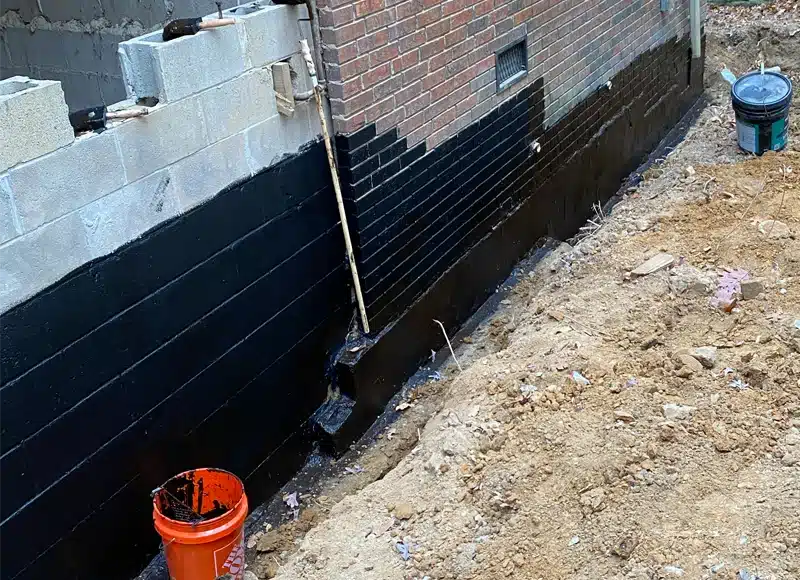
An exterior membrane forms a barrier on the outside of the foundation wall. Its service life depends heavily on the material and how it is installed and protected.
Roughly 20 to 30 years or longer is a planning estimate across suitable membrane types. Ask about the actual material: some liquid-applied products have shorter expectations than durable sheet membranes.
Coverage at seams and penetrations matters. The membrane also needs protection when soil is placed back against the wall. Damage during that process can cause problems well before the material reaches its expected age.
Basic dampproofing is different. It resists ground moisture but should not be treated as equivalent to a waterproofing membrane designed for water under pressure.
Surface Sealers and Waterproofing Coatings
Basic surface sealers or coatings may need reapplication after about 5 to 10 years. That range does not cover every masonry product. Some purpose-made waterproofing coatings have longer manufacturer coverage and may perform longer.
A coating needs a suitable, properly prepared surface. Loose paint, mineral deposits, or application conditions outside the product’s instructions can interfere with adhesion or curing.
Coating a wall also differs from professional crack injection, which fills a crack through the wall. Neither approach should be assumed to correct ongoing structural movement.
What Shortens Basement Waterproofing Lifespan?
Water Continues Collecting Around the Foundation
When soil becomes saturated, water can press against basement walls and floors. This is called hydrostatic pressure.
Overflowing gutters, poorly directed downspouts, and ground that slopes toward the house can increase the amount of water near your foundation. For a homeowner whose basement gets wet after rain, these drainage conditions deserve attention.
Our guide to common causes of basement leaks explains why identifying the source matters before choosing a repair.
Installation Problems or Foundation Movement
Gaps in a membrane, inadequate surface preparation, or an unsuitable drainage layout can limit performance from the beginning.
Later movement can create new cracks or strain existing seals. If cracks widen or a wall changes shape, have the foundation evaluated rather than repeatedly covering the same spot.
Drainage and Equipment Are Neglected
Restrictions in a drain, pump, or discharge line can leave water inside. Repeated short cycling can wear pump components. Changes in how your pump runs warrant a check at any age.
How to Help Your Waterproofing Last Longer
Routine checks help you catch changes before they become recurring leaks:
- Keep gutters clear and confirm downspouts carry water away from the foundation.
- Check the outdoor discharge outlet for visible obstructions.
- Look for new damp spots or seepage after rainfall.
- Follow your pump manufacturer’s testing and service instructions.
- Check backup equipment and batteries according to their manuals.
- Maintain dehumidifier filters and drainage as directed.
Testing intervals vary by equipment. Some sump pump instructions call for inspection and testing at least every three months. Use the schedule for your actual model, and ask a professional if you are unsure how to test it safely.
Do not handle electrical equipment while standing in water. Leave pump repairs, drain access, and buried membrane inspections to qualified professionals.
Signs Your System Needs an Inspection

Schedule an evaluation if you notice:
- New puddles or water along the wall-floor joint.
- Damp areas that return after rain.
- Peeling or blistering masonry coatings.
- New or widening cracks.
- A pump that runs continuously, repeatedly starts and stops, or fails to remove water.
- Persistent musty odors or elevated humidity.
These signs do not all prove waterproofing has failed. Condensation forms when humid air meets a cooler surface. Your basement may need humidity control even when drainage works.
Do You Need Maintenance, Repairs, or Replacement?
Start with the cause of the moisture.
A restricted outlet may need clearing. A worn pump may need replacement. A localized leak may require a targeted repair. Broader changes to the system may be appropriate when it cannot manage the water entering the basement or when damage is widespread.
Evaluate installation records, equipment condition, and water entry patterns alongside age before deciding to replace a system.
Does a Waterproofing Warranty Tell You How Long It Lasts?
A warranty describes coverage under specific terms. Expected service life describes how long a product or system may perform.
Ask about covered components, labor, required maintenance, and transfer conditions. Pumps and batteries may have different terms from drainage materials.
A lifetime warranty does not mean every component will work forever without maintenance. Review the written agreement for your installation.
Frequently Asked Questions
Have Questions? We Have Solid Answers.
Some systems can serve a home for decades. Continued performance depends on the method, installation, drainage conditions, and upkeep. Pumps and other equipment may need replacement while the drainage remains useful.
No. The meaning of “lifetime” and the scope of coverage depend on the agreement. Read the terms for covered components, exclusions, maintenance requirements, and transfer conditions.
Usually, it does not. If the drainage and discharge line are in good condition, replacing a worn pump may be enough. An inspection can confirm whether other repairs are needed.
Possible causes include condensation, high humidity, a new leak, or a drainage or equipment problem. Identifying the moisture source helps determine whether you need humidity control, maintenance, or repairs.
Have Questions About Your Basement Waterproofing?
If moisture keeps returning or you are unsure how an older system is performing, DFX Foundation & Waterproofing Experts can help identify the problem. Schedule an evaluation for your home so you can understand what needs attention and choose the next step.